
What Is a Sewer Cleanout & Why Does It Matter?
May 25, 2022
September 21, 2026

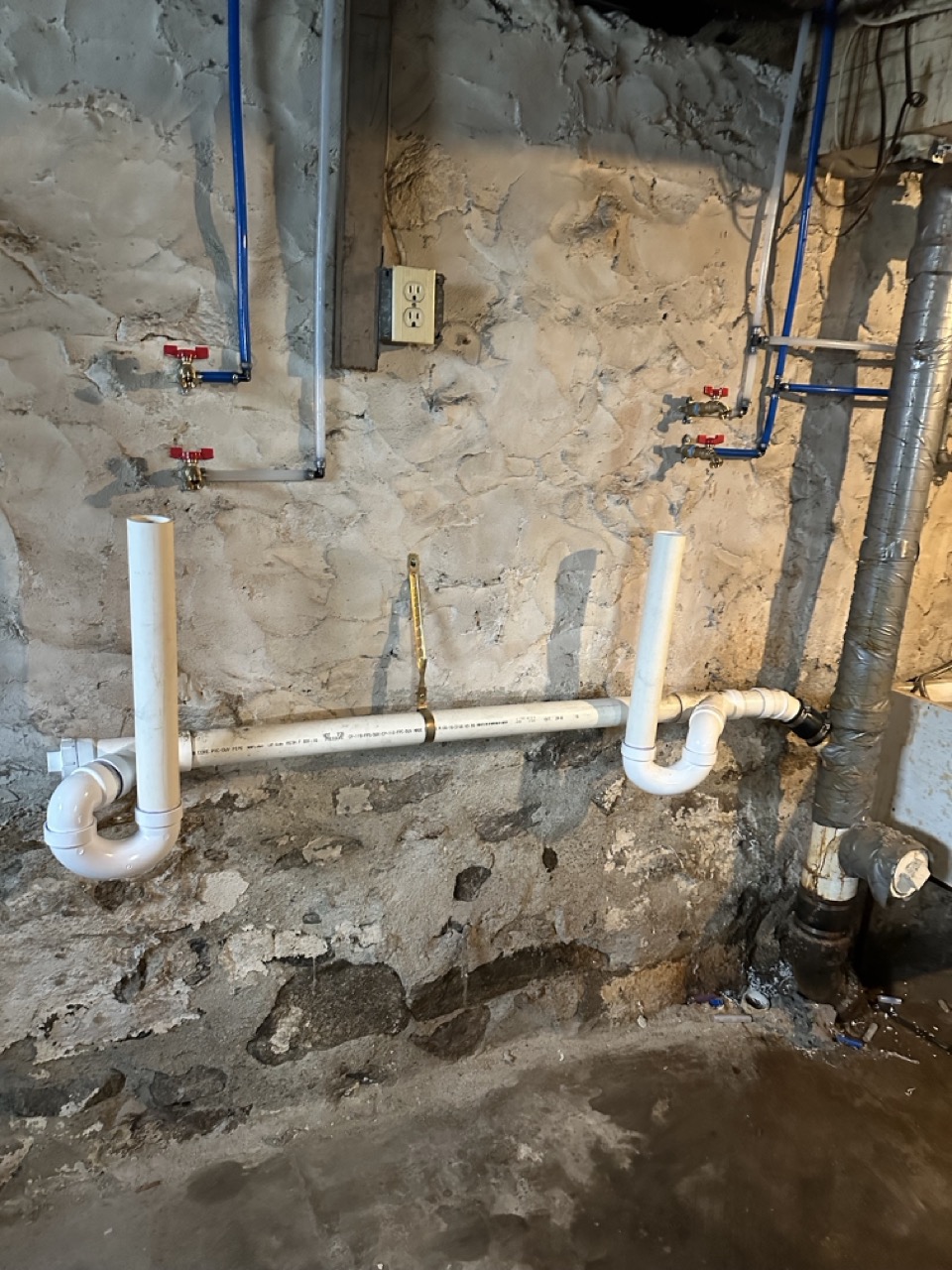
If you’ve looked inside the basement of a newer home—or watched plumbing being installed during a renovation—you’ve probably noticed flexible red, blue, or white tubing running where copper pipe might traditionally have been used.
That tubing is commonly PEX, short for cross-linked polyethylene. PEX has become widely used for hot- and cold-water distribution in residential plumbing because it is flexible, corrosion-resistant, and can often be installed with fewer fittings than rigid piping.
But because it’s plastic, homeowners understandably ask questions: Is PEX safe for drinking water? How long does it last? Is copper better? And what about stories of older plastic plumbing systems being recalled or failing?
Let’s separate some of the facts from the confusion.
PEX begins as polyethylene that undergoes a process known as cross-linking. This changes the molecular structure of the material and produces tubing capable of handling the temperatures and pressures encountered in plumbing applications.
Unlike rigid copper, PEX can bend around corners and obstacles. That flexibility can reduce the number of elbows and other fittings required throughout a plumbing system.
PEX tubing intended for hot- and cold-water distribution is manufactured and tested to industry standards such as ASTM F876 and ASTM F877, along with standards applicable to the fittings and connection system being used. Plastic Pipe Institute
You'll often hear PEX described as PEX-A, PEX-B, or PEX-C.
These letters primarily describe the method used to manufacture and cross-link the polyethylene. They should not simply be interpreted as grades where A is automatically “best,” B is second-best, and C is worst.
Different manufacturing methods can affect characteristics such as flexibility and how the tubing works with particular fitting and connection systems.
For homeowners, the more important question is whether the specific tubing, fittings, and connection method are approved for the intended application and installed according to the manufacturer's requirements.
PEX-A, PEX-B and PEX-C describe different manufacturing methods—not a simple best-to-worst grading system.
This is probably the biggest question homeowners have about PEX.
PEX products intended for potable-water systems are subject to standards governing materials that come into contact with drinking water. NSF/ANSI/CAN 61 establishes health-effects requirements for drinking-water system components, including piping products. NSF states that the principal North American plumbing codes require potable-water piping products, including PEX tubing and fittings, to comply with this standard. NSF
The standard evaluates substances that could potentially migrate from plumbing materials into drinking water and whether detected levels meet established health requirements. NSF
That distinction matters. Rather than making a blanket statement that all plastic pipe is safe, homeowners should look for PEX products specifically listed and certified for potable-water use.
NSF maintains listings of certified PEX products, including products evaluated to ASTM F876/F877 and NSF drinking-water requirements. NSF
PEX used in drinking-water systems also has to contend with disinfectants used in public water supplies.
ASTM standards include requirements related to chlorine resistance, and certified PEX products can carry material designation codes reflecting their tested performance. NSF's certified-product listings identify PEX products meeting ASTM F876 chlorine-resistance requirements through testing under ASTM F2023. NSF
As with any plumbing material, however, actual service conditions matter. Water chemistry, temperature, pressure, installation practices, product selection, and manufacturer requirements can all affect the performance of a plumbing system.
Yes—but this is also where different materials sometimes get lumped together.
One of the most notorious older plastic plumbing materials was polybutylene, commonly called PB. Polybutylene and PEX are different materials.
So finding older gray plastic piping in a house does not automatically mean you're looking at PEX, and historical problems involving one type of plastic plumbing shouldn't automatically be attributed to every other plastic piping material.
There have also been problems, disputes, and product-specific issues involving particular PEX systems, fittings, or components over the years. That's another reason it's better to evaluate the specific manufacturer, tubing, fittings, installation method, and product markings rather than judging an entire plumbing system solely because the pipe is plastic.
There isn't a universal winner.
Copper has a long history in residential plumbing and remains an excellent material when properly selected and installed. PEX offers different advantages, including flexibility, resistance to corrosion of the tubing itself, and the ability to reduce the number of fittings required in certain installations.
Water chemistry can also influence material selection. NSF notes, for example, that acidic water can contribute to copper leaching and that nonmetallic piping such as PEX may be considered in those circumstances. NSF
On the other hand, PEX has its own installation requirements and limitations. It needs to be protected from inappropriate environmental exposure and installed with compatible fittings and approved connection methods.
The better question isn't necessarily “Is PEX better than copper?”
It's “Which material makes sense for this particular plumbing system?”
The tubing itself is only part of a PEX plumbing system.
PEX can be installed using several fitting and connection methods, and tubing markings identify compatible standards and systems. Depending on the product, those may include expansion, crimp, clamp, or other approved connection methods. Plastic Pipe Institute
Mixing incompatible components or ignoring manufacturer installation requirements can undermine an otherwise properly designed system.
That's why seeing “PEX” printed on a piece of tubing doesn't tell the entire story. The pipe, fittings, connection system, application, and workmanship all matter.
Seeing PEX in your home isn't, by itself, a reason for concern.
PEX is widely used for residential hot- and cold-water distribution, and certified potable-water products are manufactured and evaluated under established plumbing and drinking-water standards. NSF
If you're evaluating an existing system, look beyond simply asking whether the pipes are plastic. The manufacturer and markings on the tubing, age of the system, type of fittings, installation quality, signs of leakage, water conditions, and whether the components were approved for their application provide much more useful information.
Copper, PEX, CPVC, and other approved materials each have characteristics that can make them appropriate in different situations.
PEX has changed how many modern plumbing systems are installed, but the material alone doesn't determine whether a plumbing system is good or bad. Proper product selection, compatible fittings, code-compliant installation, water conditions, and workmanship are what turn individual components into a reliable plumbing system.
At The Plumah Plumbing & Drain Services, we evaluate the plumbing system as a whole and select materials and installation methods appropriate for the property and application.
For homeowners who want to dig deeper into PEX standards and drinking-water requirements, NSF provides information on both PEX safety and certification, while industry guidance explains the applicable ASTM standards and identification markings used on PEX tubing. NSF
NSF — FAQ on the Safety of PEX Plumbing Products
NSF — Certified PEX Plumbing Products