
What Is a Sewer Cleanout & Why Does It Matter?
May 25, 2022
October 4, 2026
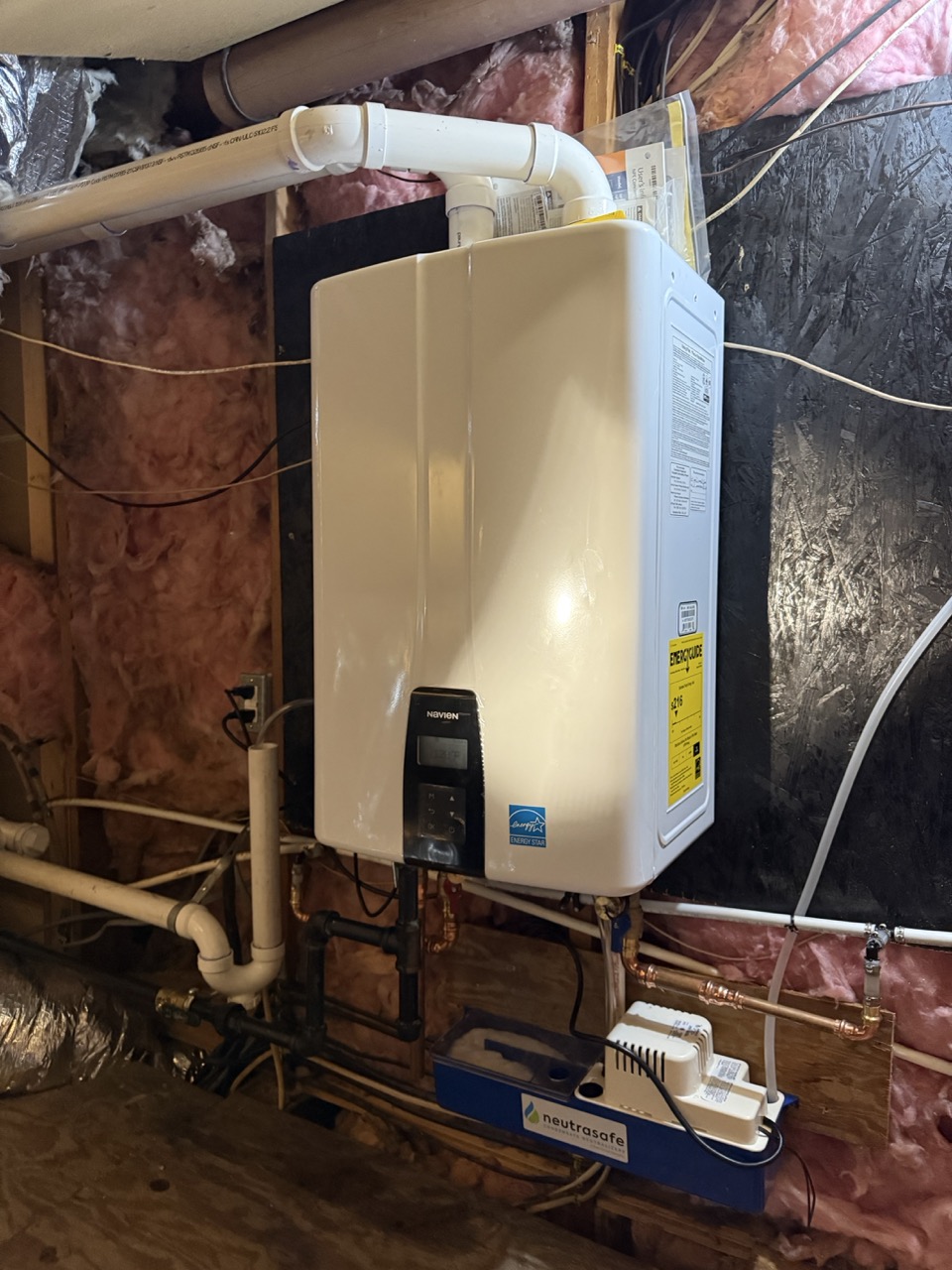
Choosing between a traditional tank water heater and a tankless system isn’t simply a matter of deciding which one is “better.” Both can provide reliable hot water, but they operate differently and can make more sense for different homes, usage patterns, budgets, and plumbing systems.
Understanding those differences can help you make a more informed decision when it’s time to replace or upgrade your water heater.
A traditional water heater stores a set amount of heated water in an insulated tank. Common residential sizes vary depending on the home and its hot-water demand.
The system heats the stored water and maintains its temperature so hot water is ready when a fixture or appliance calls for it.
Tank water heaters are familiar, straightforward systems and can often be a practical replacement when a home is already configured for one.
A tankless water heater does not keep a large supply of hot water stored in a tank. Instead, it heats water as it flows through the unit when there is demand for hot water.
Because the system heats water on demand, it can provide an extended supply of hot water when the unit is properly sized for the home's needs.
However, tankless does not mean unlimited capacity. Every unit has limits on how much hot water it can produce at one time.
This is one of the biggest differences between the two systems.
A tank water heater has a stored supply of hot water. Heavy usage can eventually deplete that supply, after which the system needs time to recover.
A tankless system doesn't have a tank to empty, but it does have a maximum flow capacity. Running several showers, faucets, or appliances simultaneously can exceed what a particular unit is designed to handle.
The right water heater isn't just about tank versus tankless. Proper sizing matters just as much as the type of system you choose.
Tankless water heaters can reduce the energy associated with continually maintaining a stored tank of hot water. Actual savings, however, depend on factors such as household water usage, equipment type, fuel source, installation, and system efficiency.
A newer high-efficiency tank water heater may also be a significant improvement over an older system.
For that reason, efficiency should be considered alongside installation cost, expected usage, maintenance, and the needs of the property.
Yes.
Tankless systems should not be treated as maintenance-free equipment. Mineral buildup and water quality can affect the heat exchanger and other components over time.
Maintenance requirements vary by manufacturer and local water conditions, so homeowners should follow the maintenance schedule specified for their particular equipment. Keeping up with required maintenance may also be important for maintaining manufacturer warranty coverage.
Traditional tank water heaters also benefit from routine inspection and maintenance.
Not necessarily.
Replacing a tank water heater with another similar tank is often more straightforward than converting the property to tankless.
A tankless conversion may require changes to water piping, venting, gas supply, electrical service, condensate drainage, or other parts of the installation depending on the equipment and existing conditions.
That doesn't mean tankless is a bad choice—it simply means the entire installation should be evaluated, not just the water heater itself.
There isn't one answer for every property.
A traditional tank water heater may make sense when simplicity, initial cost, and compatibility with the existing system are priorities.
A tankless system may make sense when space, efficiency, longer-duration hot-water demand, or other project-specific considerations make its advantages worthwhile.
The best choice depends on the home's hot-water demand, available utilities, existing plumbing, equipment location, budget, and long-term expectations.
Before choosing a water heater, look at how the property actually uses hot water and what the existing plumbing and utilities can support.
The Plumah can evaluate the existing system, discuss traditional and tankless options, and help determine an appropriate solution for your home or project.